Tips for Creating a Relaxing Home Office Environment

Creating a relaxing home office environment is essential for maintaining focus, reducing stress, and boosting productivity. Whether you work from home full-time or spend occasional hours catching up on tasks, the atmosphere of your workspace has a significant impact on your work experience. Here, we explore practical tips to help you design a calm and inviting home office that supports your wellbeing.
1. Choose the Right Location
Start by selecting a dedicated space that can be reserved exclusively for work. Ideally, this should be a quiet area away from household distractions, if possible. A corner in a spare room, a nook near a window, or a section of your living room can work well. Having a clearly defined space for work helps your brain switch into “work mode” and signals the start and end of your workday.
2. Prioritise Natural Light
Natural light is a crucial factor in creating a relaxing environment. If your workspace can be positioned near a window, you’ll benefit from daylight which can improve mood, energy levels, and reduce eye strain. Avoid harsh direct sunlight by using curtains or blinds that diffuse light gently to prevent glare on screens.
3. Opt for Comfortable and Ergonomic Furniture
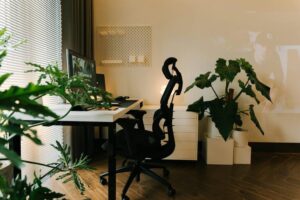
Investing in ergonomic furniture supports both comfort and good posture, preventing aches and fatigue. A well-adjusted office chair with lumbar support paired with a desk at the right height can make a huge difference. If possible, consider a desk that allows flexibility, such as a sit-stand desk, which lets you alternate positions throughout the day.
4. Keep Your Space Organised and Clutter-Free
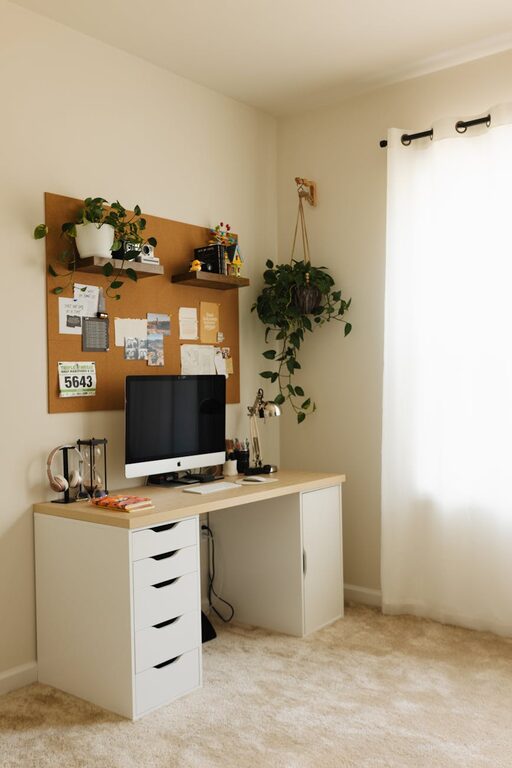
A tidy workspace can reduce feelings of stress and distraction. Use storage solutions like shelves, drawers, and filing cabinets to keep documents and supplies neatly stored. Desk organisers and cable management tools prevent mess and help maintain a clean surface. Regularly declutter your desk to create a calming environment.
5. Incorporate Soothing Colours and Personal Touches
Colours influence the mood of a room. Soft, neutral tones like light blues, greens, or warm greys tend to create a calming atmosphere, while brighter shades can be energising. Choose colours that suit your work style and preference. Adding personal items such as plants, artwork, or meaningful photographs can also make your space feel welcoming without causing distraction.
Bringing Nature Inside
Indoor plants are especially effective in creating a relaxing workspace. They improve air quality and lend a touch of nature, which has been shown to reduce stress and increase concentration. Easy-to-care-for options like snake plants, pothos, or succulents are ideal for busy working environments.
6. Manage Noise Levels
Noise can be a major source of distraction. If external sounds disturb you, consider solutions such as noise-cancelling headphones, white noise machines, or sound-absorbing materials like rugs and curtains. If your household tends to be noisy, try to schedule work during quieter times or use soft background music to help maintain focus.
7. Optimise Lighting for Work and Comfort
Good lighting is vital to reduce eye strain, especially if you work late hours. Alongside natural light, use adjustable desk lamps with warm, soft bulbs that you can position to avoid glare on your screen. Avoid harsh fluorescent lights which can be tiring over long periods.
8. Incorporate Movement Breaks and Relaxation Zones
Taking brief breaks to stretch or move can refresh your mind and body. If space allows, include a comfortable chair or bean bag for short relaxation sessions or reading away from your desk. Even a small corner with cushions can encourage short mental breaks, boosting productivity overall.
9. Use Technology Wisely
Keep your technology setup simple and efficient. Use reliable devices and invest in wireless accessories to reduce cable clutter. Silence unnecessary notifications to lower interruptions, and try productivity apps that remind you to take breaks or help manage tasks smoothly.
10. Maintain a Consistent Routine
Finally, creating a relaxing home office is also about your habits. Stick to regular working hours, dress in comfortable but purposeful clothing, and set clear boundaries between work and personal time. This consistency helps maintain focus and prevents work from spilling into your relaxation hours.
—
A relaxing home office environment supports not only your work but also your mental and physical well-being. By creating a space that feels calm, organised, and personalised, you set yourself up for better concentration and enjoyment during your workday. With these tips, you can design a home office that balances productivity with peace, making work-from-home both efficient and enjoyable.